Cat and Shanmao's blog
Tuesday, March 31, 2009
TODO reading/viewing list
- John Gray, philosopher
- Darwinism, Dominance, and Democracy: The Biological Bases of Authoritarianism (Human Evolution, Behavior, and Intelligence)
- Human Nature and Public Policy: An Evolutionary Approach
- Adam Curtis, filmmaker
- Herbert Simon, economist
- An important paper by Simon
- Money and Magic (A Critique of the Modern Economy in Light of Goethe's Faust) by H.C. Binswanger
Tuesday, March 24, 2009
The Goldberg Variations
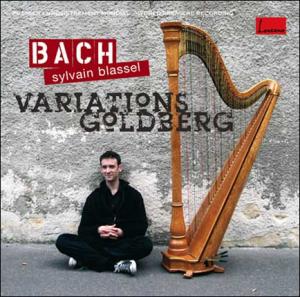
Thought I would share my discovery of a new recording of Bach's Goldberg Variations. I was in a bookstore yesterday browsing a classical music magazine and discovered that Bach's masterpiece for the keyboard had been recorded for the first time for the harp by Sylvain Blassel on Lontano records. Interestingly, another recording by Catrin Finch was released with a sticker proclaiming it as the "first recording of Bach's Goldberg Variations on the harp".Unfortunately, a few days before Finch's recording was released, Blassel's recording came out. While Blassel plays the music virtually note for note from the original keyboard score, Finch harp-ifies the piece, modifying and transcribing the music. You can sample some of the music and video of Blassel on you tube here. The harp lends a very dreamy quality to the music.
I am a fan of the Bach and the Goldberg variations and enjoy listening to this music presented in new and interesting ways. I've picked up recordings of transcriptions for various instrumentations. Here are some notable versions.
String Trio
Some years ago, I picked up a CBC Radio recording of the Goldbergs transcribed for string trio and performed by Triskelion. The string trio is the most satisfying version of the Goldbergs. The warm sound of the strings and the clarity of the parts makes for great listening. The independent polyphonic voices in the canons can be clearly recognized in ways that are simply impossible for even the greatest keyboard player - or for that matter any soloist on any other uni-timbral instrument in my humble opinion.
Guitar
Josef Eotvos takes the prize for jaw dropping accomplishment on the solo guitar. He transcribed and performed the variations and this is simply a great recording.
Guitar Duo
Kurt Rodarmer from the San Francisco Bay Area had guitars specially built, one normal guitar and one lower register guitar, then recorded both parts and using the magic of recording technology overlayed them to produce this great recording. As with any ensemble performance, the guitar duo combination and overlayed recordings results in a less personal but still rewarding version of the Goldbergs.
Jazz Ensemble
Both Uri Caine and Jacques Loussier have recorded their elaborations on the Goldberg variations and are definitely worthy of many a listening.
I've been listening to the Goldbergs since highschool. I think it was on a class trip to the ROM in Toronto when we had free time to visit the Eaton's center that I picked up a recording by Glenn Gould. Growing up in Canada and being a loyal Canadian content consumer it was hard not to eventually hear about Glenn Gould. I think I read some article in the Toronto Star and picked up the recording as a result. I listened to this cassette for years - even incorporating a couple of tracks into a class project - I produced a video ad for the go club (the east Asian board game) at my school and showed a go game being played in time lapse with excerpts from Gould's recording as the sound track.
Having listened to other recordings since then and having listened to more Bach I still appreciate Gould's take on the Goldbergs but recommend them (the 1955 and 1982 recordings) as a starting point for introducing and eventually immersing yourself into the world of Bach. For after all, as intelligent and artistic and thoughtful as Gould was, the ultimate thing you're listening to is the music of Bach. Bach's music is more than any single recording, is more than the Goldbergs, is more than the keyboard works, and is probably worthy of a lifetime of listening, reflection, and learning.
Transcriptions are kind of a 'gateway drug' for me to understand and appreciate works that intially don't appeal to me. While I understood that the violin sonatas and partitas were clearly great achievements they didn't have personal meaning until I heard Scott Slapin's transcription for solo viola. The lower register register and warmth of the viola brought home the music to me in a way that was difficult in the higher (and more shrill) violin. Slapin also throws in a great rendition of the flute partita. Similarly, the recording by the San Francisco Symphony's principal violist, Don Erlich, of the cello suites for played instead on solo viola opened up this music in the way that Yo-Yo Ma and all the other great cellists (Starker, Bylsma - stay away from Rostropovich except for his prologue on the DVD) couldn't do for me.
Speaking of transcriptions, I suspect that even some very knowledgable and talented performers and musicians don't know the depth of Bach's output. I certainly don't. In Angela Hewitt's recording of the viola da gamba sonatas with Daniel Muller-Schott, she comments that this music was a new discovery for her. Fortunately, there are several 'complete' recordings (around 180 CDs) that are available so you have the opportunity to experience all of Bach, something that great musical minds of the past such as Beethoven and Mozart would have found impossible or extremely difficult.
You can listen for a lifetime to a work but never understand some of the underlying structures and ideas. A pity since a little insight will bring many things into focus. If you want to do more than just listen, I highly recommend Robert Greenberg's audio lecture Bach and the High Baroque as a great overview of Bach's life and music. You'll get a great intro to his life and times and the culture he was immersed in. You'll receive some casual technical insight into the music and will receive a great overview of the great genres and works. If you're interested in additional in-depth reading about Bach's keyboard music you should consider Badura-Skoda's Interpreting Bach at the Keyboard.
If you want to understand how influential dance and French music and culture were on Bach and on his music read the first chapter of Dance and the Music of J. S. Bach by Little and Jenne. You'll wonder why Gould belittled Bach's suites for keyboard. The suites for keyboard and all instruments and ensembles will become more meaningful.
Another important area of investigation is to understand the influences on Bach. He didn't fall out of the sky completely formed. Centuries of musical, spiritual, and social traditions influenced him. Centuries of genius led up to this genius.
Hopefully, you'll be inspired by the Goldberg variations and will be inspired to learn and discover more.
Links
- Gui and Matthew's Home Page
- Gui and Matthew's Guestbook
- Jean's blog
- Letters from Thailand
- The weather in San Mateo
- Peninsula Library System
- San Francisco Public Library
- San Mateo County Transit
- Caltrain
Archives
current
01/01/2004 - 02/01/2004
02/01/2004 - 03/01/2004
03/01/2004 - 04/01/2004
06/01/2004 - 07/01/2004
07/01/2004 - 08/01/2004
10/01/2004 - 11/01/2004
11/01/2004 - 12/01/2004
12/01/2004 - 01/01/2005
01/01/2005 - 02/01/2005
02/01/2005 - 03/01/2005
04/01/2005 - 05/01/2005
05/01/2005 - 06/01/2005
02/01/2006 - 03/01/2006
03/01/2006 - 04/01/2006
06/01/2006 - 07/01/2006
10/01/2006 - 11/01/2006
12/01/2006 - 01/01/2007
01/01/2007 - 02/01/2007
02/01/2007 - 03/01/2007
03/01/2007 - 04/01/2007
04/01/2007 - 05/01/2007
06/01/2007 - 07/01/2007
07/01/2007 - 08/01/2007
08/01/2007 - 09/01/2007
12/01/2007 - 01/01/2008
02/01/2008 - 03/01/2008
04/01/2008 - 05/01/2008
05/01/2008 - 06/01/2008
09/01/2008 - 10/01/2008
11/01/2008 - 12/01/2008
03/01/2009 - 04/01/2009
05/01/2009 - 06/01/2009

