Cat and Shanmao's blog
Saturday, May 30, 2009
Friday concert in Burlingame by Rami Bar-niv
I went to one of his concerts before where his piano teacher played - and was a little disappointed. I've seen that other concerts had students from the SF conservatory and had wished I had attended a couple of those. Well, this time Harry invited me to attend to hear Rami Bar-niv, who I knew absolutely nothing about and had never heard of.
Rami is an Israeli who comes to the US a few times a year on piano related business, giving concerts and running a twice-a-year piano camp.
He played Beethoven's 4th piano concerto with a keyboard accompaniment. The keyboard was a Yamaha digital keyboard which was less than ideal and the accompanist was obviously not a pro. But Rami was! He simply knew the piece inside out. Would take over from the accompanist when the piano solos came on and could really pull you into the piece with his sense of rhythym, musicality, and technical fireworks. He would direct the accompanist, nodding or pointing when her entries were due, sometimes slowing down the piano part to make the 'orchestra' entries easier.
After the intermission there were a few classics followed by pieces that Rami wrote himself, including a Toccata written just after the Begin-Sadat peace talks, a rhapsody on some Israeli tunes, and an 'etude-vocalise' on Bach's first prelude from the well tempered clavier. The toccata had resulted in an invitation to play in Egypt after the peace talks. Apparently, he's the only Israeli performed to have played in Egypt since that time!(?)
The introductions to the pieces were full of wit and self-deprecating humor. Rami's playing was excellent. Thoughtful, with insight into the music. A good, sprightly technique. A good feeling for the ebb and flow of the pieces. I was impressed. And was happy to essentially sight only 10 feet away during the performance so I could see how a pro plays.
As for the venue and audience, the turnout was low. Although the condo is not a senior's complex there have turned out to be many seniors who live there. And it seems that Harry was the driving force behind bringing in many audience members - several of them were former fellow volunteers for late congressman Tom Lantos, someone who was greatly admired by Harry.
Afterwards, one of the women at the concert said to me, it's ridiculous how Harry can manage to bring in good pianists, have incredibly low turnouts, and only charge $9 a ticket. (Harry said my money was no good there so my entry was free.) It defies any reasonable expectation about things should work.
Monday, May 25, 2009
Picture of Ashburn in winter

Was browsing the web for Ashburn pictures and noticed a new series of photos of trains on the tracks by Ashburn Road. Click on the link to see a larger version.
The train was of some interest but what I found great about this picture is how it captures the spirit of Ashburn in wintertime. The snow on the ground. The brown plants poking through. The trees in the distance empty of their leaves. The muted colour of the winter sky. I can just hear the quietness of a winter day, can imagine walking over the snowy field all bundled up, and returning home for a bowl of warm soup.
Tuesday, March 31, 2009
TODO reading/viewing list
- John Gray, philosopher
- Darwinism, Dominance, and Democracy: The Biological Bases of Authoritarianism (Human Evolution, Behavior, and Intelligence)
- Human Nature and Public Policy: An Evolutionary Approach
- Adam Curtis, filmmaker
- Herbert Simon, economist
- An important paper by Simon
- Money and Magic (A Critique of the Modern Economy in Light of Goethe's Faust) by H.C. Binswanger
Tuesday, March 24, 2009
The Goldberg Variations
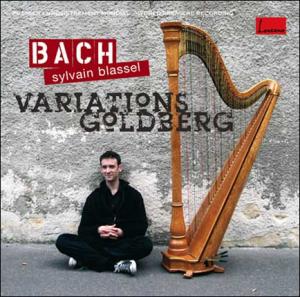
Thought I would share my discovery of a new recording of Bach's Goldberg Variations. I was in a bookstore yesterday browsing a classical music magazine and discovered that Bach's masterpiece for the keyboard had been recorded for the first time for the harp by Sylvain Blassel on Lontano records. Interestingly, another recording by Catrin Finch was released with a sticker proclaiming it as the "first recording of Bach's Goldberg Variations on the harp".Unfortunately, a few days before Finch's recording was released, Blassel's recording came out. While Blassel plays the music virtually note for note from the original keyboard score, Finch harp-ifies the piece, modifying and transcribing the music. You can sample some of the music and video of Blassel on you tube here. The harp lends a very dreamy quality to the music.
I am a fan of the Bach and the Goldberg variations and enjoy listening to this music presented in new and interesting ways. I've picked up recordings of transcriptions for various instrumentations. Here are some notable versions.
String Trio
Some years ago, I picked up a CBC Radio recording of the Goldbergs transcribed for string trio and performed by Triskelion. The string trio is the most satisfying version of the Goldbergs. The warm sound of the strings and the clarity of the parts makes for great listening. The independent polyphonic voices in the canons can be clearly recognized in ways that are simply impossible for even the greatest keyboard player - or for that matter any soloist on any other uni-timbral instrument in my humble opinion.
Guitar
Josef Eotvos takes the prize for jaw dropping accomplishment on the solo guitar. He transcribed and performed the variations and this is simply a great recording.
Guitar Duo
Kurt Rodarmer from the San Francisco Bay Area had guitars specially built, one normal guitar and one lower register guitar, then recorded both parts and using the magic of recording technology overlayed them to produce this great recording. As with any ensemble performance, the guitar duo combination and overlayed recordings results in a less personal but still rewarding version of the Goldbergs.
Jazz Ensemble
Both Uri Caine and Jacques Loussier have recorded their elaborations on the Goldberg variations and are definitely worthy of many a listening.
I've been listening to the Goldbergs since highschool. I think it was on a class trip to the ROM in Toronto when we had free time to visit the Eaton's center that I picked up a recording by Glenn Gould. Growing up in Canada and being a loyal Canadian content consumer it was hard not to eventually hear about Glenn Gould. I think I read some article in the Toronto Star and picked up the recording as a result. I listened to this cassette for years - even incorporating a couple of tracks into a class project - I produced a video ad for the go club (the east Asian board game) at my school and showed a go game being played in time lapse with excerpts from Gould's recording as the sound track.
Having listened to other recordings since then and having listened to more Bach I still appreciate Gould's take on the Goldbergs but recommend them (the 1955 and 1982 recordings) as a starting point for introducing and eventually immersing yourself into the world of Bach. For after all, as intelligent and artistic and thoughtful as Gould was, the ultimate thing you're listening to is the music of Bach. Bach's music is more than any single recording, is more than the Goldbergs, is more than the keyboard works, and is probably worthy of a lifetime of listening, reflection, and learning.
Transcriptions are kind of a 'gateway drug' for me to understand and appreciate works that intially don't appeal to me. While I understood that the violin sonatas and partitas were clearly great achievements they didn't have personal meaning until I heard Scott Slapin's transcription for solo viola. The lower register register and warmth of the viola brought home the music to me in a way that was difficult in the higher (and more shrill) violin. Slapin also throws in a great rendition of the flute partita. Similarly, the recording by the San Francisco Symphony's principal violist, Don Erlich, of the cello suites for played instead on solo viola opened up this music in the way that Yo-Yo Ma and all the other great cellists (Starker, Bylsma - stay away from Rostropovich except for his prologue on the DVD) couldn't do for me.
Speaking of transcriptions, I suspect that even some very knowledgable and talented performers and musicians don't know the depth of Bach's output. I certainly don't. In Angela Hewitt's recording of the viola da gamba sonatas with Daniel Muller-Schott, she comments that this music was a new discovery for her. Fortunately, there are several 'complete' recordings (around 180 CDs) that are available so you have the opportunity to experience all of Bach, something that great musical minds of the past such as Beethoven and Mozart would have found impossible or extremely difficult.
You can listen for a lifetime to a work but never understand some of the underlying structures and ideas. A pity since a little insight will bring many things into focus. If you want to do more than just listen, I highly recommend Robert Greenberg's audio lecture Bach and the High Baroque as a great overview of Bach's life and music. You'll get a great intro to his life and times and the culture he was immersed in. You'll receive some casual technical insight into the music and will receive a great overview of the great genres and works. If you're interested in additional in-depth reading about Bach's keyboard music you should consider Badura-Skoda's Interpreting Bach at the Keyboard.
If you want to understand how influential dance and French music and culture were on Bach and on his music read the first chapter of Dance and the Music of J. S. Bach by Little and Jenne. You'll wonder why Gould belittled Bach's suites for keyboard. The suites for keyboard and all instruments and ensembles will become more meaningful.
Another important area of investigation is to understand the influences on Bach. He didn't fall out of the sky completely formed. Centuries of musical, spiritual, and social traditions influenced him. Centuries of genius led up to this genius.
Hopefully, you'll be inspired by the Goldberg variations and will be inspired to learn and discover more.
Sunday, November 09, 2008
Book Review: In Defense of Food by Michael Pollan
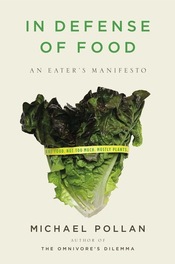 Michael Pollan's bestselling book The Omnivore's Dilemna took us on a journey through the US (and Canadian) food systems. Highly influential, I've seen the book numerous times on the bus and subway, and have had several conversations about it. Unfortunately, for those who wanted some advice they could take home for day to day living there wasn't much there. Never fear, eager to help out his countless readers Pollan has prepared the extremely interesting and practical In Defense of Food.
The book is divided into three parts - a jeremiad against nutrition science, an examination of the health effects of the diet nutrition science has deliver to us, and then finally a blueprint for deciding how to eat.
First off, the title needs some explanation. Pollan differentiates between food and food products. Food is what your grandmother or great grandmother would recognize. Food products are what 80% of the supermarket is stocked with. The first paragraph in the book (and which is cleverly printed on the band wrapping the lettuce on the front cover photo) summarizes everything that follows:
"Eat food. Not too much. Mostly plants."
Simple. Read the rest of the book to find out how complicated and unhealthy our eating lifestyle has become, why Pollan came to this conclusion, and his practical advice for making day to day decisions.
Nutrition science - the food pyramid, studies on the effects of trans fat, debates about the merits and perils of coffee and alcohol, the famous sample group of nurses that form the basis of many medical conclusions. He covers this area well and it is an eye opener. Although science and technology have given us many wonderful things we have to remember that scientists are humans prone to fallibility, bias, manipulation, and the necessity of making a living.
One of the fascinating failings of nutrition science and government and commerical interests that promote its findings is the inability to recommend that we eat less or at least limit the amount of food we eat. We are always told that eating food A or food B solves health problem A or B. What we're seldom told is that we should consider eating less of food A, B and all the other foods in our diet. Eating less is simply a commercially unpalatable option and industry and their government representatives have made sure that no such pronouncements can be made when recommending foods and nutrients. Many health problems could be solved by simply eating less food.
I've always found reading newspaper articles about nutrition and medicine interesting. No sooner is one conclusion published on the second page then a few months later a contradictory news story published. Coffee is good for you. Coffee is bad for you. Carbs are good. Carbs are bad. Fat is good. Fat is bad. Wine is good. Wine is bad. On occasion, I've paid attention to the food pyramid but about five minutes after reviewing it I really can't remember what's in it. I tend to read the health benefits advertised on supermarkets goods - no transfat, N% of the daily recommended of vitamin X, etc. This whole system is so confusing.
Well, after you read Pollan's book you'll realize just how scary the situation is. Nutrition science is basically in the business of isolating nutrients in foods and finding ways of manufacturing new vehicles to profitably deliver those nutrientsto your body. The goal is not to improve your health (just as the current goal of GMOs is not to improve the taste or health of foods - by creating a incredibly tasty bacon double cheeseburger that's actually helps your heart out and cleans your arteries - but instead simply to maximize the profitably of pesticide use)
Pollan lays out a list of principles to eat by which I've transcribed with minimal comments here:
- Eat food
- Avoid food products containing ingredients that are a) unfamiliar, b) unpronouncable , c) more than five in number or that include d) high-fructose corn syrup
- Avoid food products that make health claims
- Shop the peripheries of the supermarket and stay out of the middle
- Get out of the supermarket whenever possible
- Eat mostly plants, especially leaves
- You are what what you eats too
- If you have the space, buy a freezer
- Eat well-grown food from healthy soils
- Eat wild foods when you can
- Be the kind of person who eats supplements
- Eat more like the French or the Italians or Japanese or the Indians or the Greeks (or I would add the Ukrainian diet, in other words, pick traditional diets and eat them instead of the non-traditional manufactured US diet)
- Regard non-traditional foods with skepticism
- Don't look for the magic bullet in the traditional diet
- Have a glass of wine with dinner
- Pay more, eat less
- Eat meals
- Do all your eating at a table
- Don't get your fuel from the same place your car does
- Try not to eat alone
- Consult your gut
- Eat slowly
- Cook and, if you can, plant a garden
Saturday, September 27, 2008
Book review: The Good Earth by Pearl S. Buck
The Good Earth is set in some 'pre-revolutionary' time with the revolution being the overthrow of the empire and the establishment of the republic. Since the book was written in 1931 Buck would have had to be a visionary indeed to set the book amidst the revolution of 1949.
The tale follows a Chinese peasant from a life lived close to the land, starting in poverty, overcoming adversity, falling into crisis, then rising in social status. We are taken through different phases of his life and see a few different levels of society. The geographic perspective is always local - foreigners are encountered only once in passing, there is a side trip to a larger provincial city to the south, war is a distant rumor, the revolution when it does occur happens late in the hero's life and he is largely unaware of even the most basic details of what the revolution actually involved. There is no mention of any emperor, little insight into the merchant class, no understanding of the complexities of the local town's social structure. His is a very simple outlook. The land and the earth are essential. Tradition is understood and must be honoured.
Buck's writing style is clear, simple, and the narrative and story line flow simply making for a quick read that you can easily re-enter after a break.
Buck's life was interesting. Spending most of her youth in China with her American missionary parents, her second language was English. I'm curious if there are audio or video interviews with her and whether she speaks Chinese in them. I'd like Gui to tell me what her speech is like.
I'm curious about not too distant lost worlds. What was life like for the First Nations (aka Native Americans, American Indians) who used to live where I've lived in Ashburn, Foster City and San Mateo, Candlestick Cove in San Francisco? They lived on the same land, although the land has been shaped and reshaped, and now would be barely recognizable to them, but their memory has been nearly wiped out.
I'm also curious about pre-revolutionary Russian and Ukraine before the plunge into the revolutionary abyss. Interestingly, the Russian festival in San Francisco seems to be a celebration of pre-revolutionary times by people who have been transported via time machine to modern day San Francisco. Not sure where these fossils come from but fascinating to contrast them with those who came directly from modern day USSR/Russia.
And of course China interests me. While controversial, because of a Western woman assuming the perspective of a Chinese male peasant, Buck provides some insight into a life and perspective that is very distant. Most Chinese people and immigrants I know would be from either intellectual backgrounds or urban labouring backgrounds. Modern day peasants are a few degrees removed from my acquaintances. And the century separating us from the characters in the book mean that many of the traditions from the names of the characters, the style of housing, small rituals, and values, are separated from me by several degrees. I'm curious to try reading some of her other books or perhaps a biography or autobiography.
Sunday, September 21, 2008
The Teaching Company
One of my fellow shuttlers, Michael, is a Russian immigrant who always wears industrial strength noise cancelling ear muffs as people do on construction sites. This is to protect his ears in BART which can be pretty noisy when going through some of the tunnels.
I eventually started talking with him and he recommended listening and/or watching lectures from the Teaching Company. I looked this up and it turns out it's a company that makes educational materials comprising audio and video lectures on various topics utilizing high quality professors from top colleges. Here's the wikipedia explanation: http://en.wikipedia.org/wiki/The_Teaching_Company. It was started by a former politician who had a vision that he wasn't able to execute on while in office, apparently due to laws about how government money can be spent. From the earliest days of audio and video, education was one of the hopes for these technologies.
The company's website is located here: http://www.teach12.com
The topics covered range from history, political science, philosophy, science, math, art, music, economics, to literature and more.
The local library system has some of the audio lectures so I grabbed some music lectures. Started with 'Bach and the High Baroque' and eventually also listened to 'Life and Music of Mozart'. The classical music lecturer is Robert Greenberg, who is based in the SF bay area, and is or was a prof at the SF Conservatory of Music. He's an iconoclastic lecturer who injects humor but also knows his stuff. I also sampled 'Yao to Mao: 5000 Years of Chinese History' but found the lecturer had all the charisma of a wet souffle. I've started listening to 'Great Books' and the lecturer is good.
Hoping to explore more topics, especially topics I didn't study in university such as history, literature, and a little philosophy.
Links
- Gui and Matthew's Home Page
- Gui and Matthew's Guestbook
- Jean's blog
- Letters from Thailand
- The weather in San Mateo
- Peninsula Library System
- San Francisco Public Library
- San Mateo County Transit
- Caltrain
Archives
current
01/01/2004 - 02/01/2004
02/01/2004 - 03/01/2004
03/01/2004 - 04/01/2004
06/01/2004 - 07/01/2004
07/01/2004 - 08/01/2004
10/01/2004 - 11/01/2004
11/01/2004 - 12/01/2004
12/01/2004 - 01/01/2005
01/01/2005 - 02/01/2005
02/01/2005 - 03/01/2005
04/01/2005 - 05/01/2005
05/01/2005 - 06/01/2005
02/01/2006 - 03/01/2006
03/01/2006 - 04/01/2006
06/01/2006 - 07/01/2006
10/01/2006 - 11/01/2006
12/01/2006 - 01/01/2007
01/01/2007 - 02/01/2007
02/01/2007 - 03/01/2007
03/01/2007 - 04/01/2007
04/01/2007 - 05/01/2007
06/01/2007 - 07/01/2007
07/01/2007 - 08/01/2007
08/01/2007 - 09/01/2007
12/01/2007 - 01/01/2008
02/01/2008 - 03/01/2008
04/01/2008 - 05/01/2008
05/01/2008 - 06/01/2008
09/01/2008 - 10/01/2008
11/01/2008 - 12/01/2008
03/01/2009 - 04/01/2009
05/01/2009 - 06/01/2009

